
Lexis+ with Protégé Review (2026): Features, Cost, Accuracy and Verdict
LexisNexis’s Protégé is a purpose-built legal AI assistant — not a general chatbot — designed to ground every answer in verifiable primary authority and check citations through Shepard’s. The Stanford RegLab hallucination study measured hallucination rates of between 17% and 33% for Lexis+ AI and Westlaw tools, compared with a rate of between 17% and 33% across the Thomson Reuters tools — a meaningful gap, though neither tool eliminates fabrication risk.
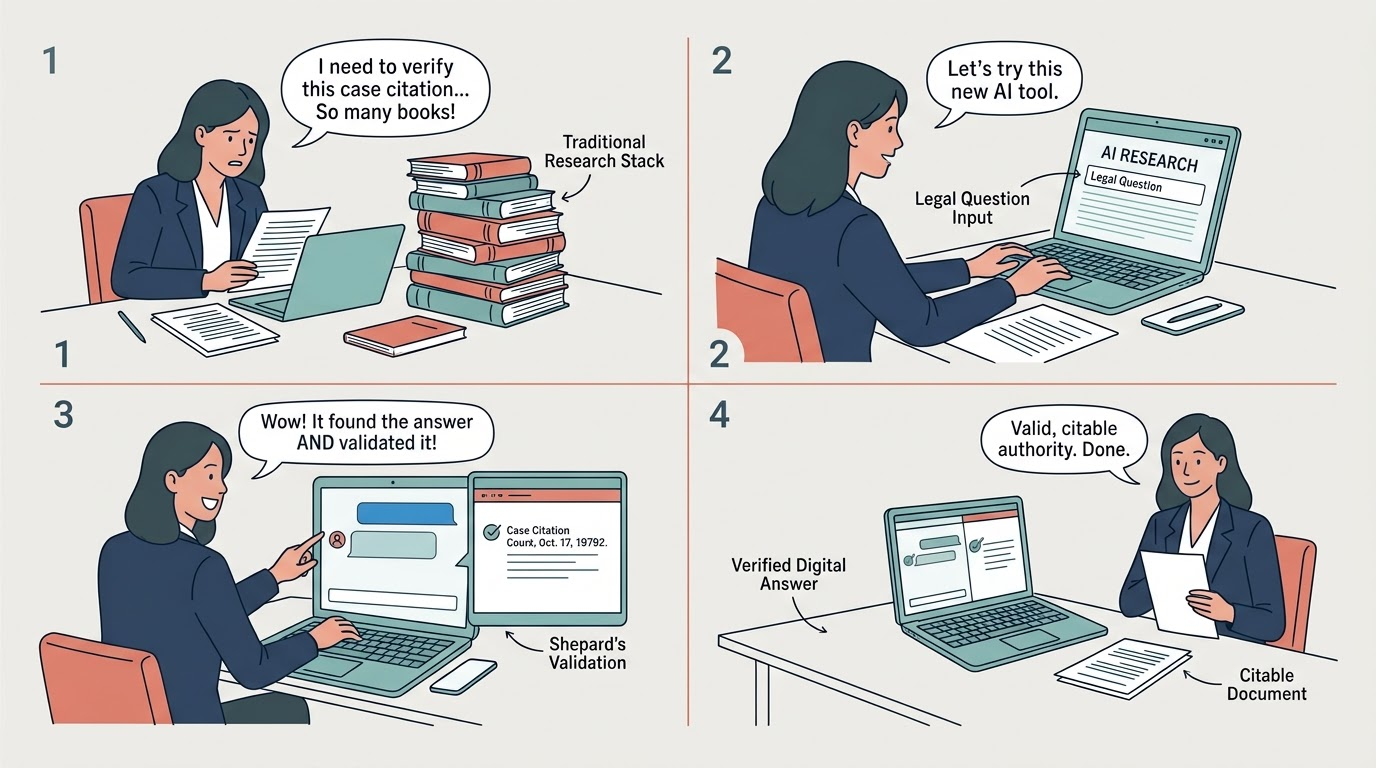
Protégé targets law firms that need AI answers tied to verifiable authority, and its core selling points are Shepard’s citation validation, an expanding library of pre-built workflows, and a multi-model architecture that routes each task to the best-fit AI model.
This review covers what Lexis+ AI Protégé does, how its Legal Intelligence Engine works, what the Stanford accuracy data actually says, how much it costs for US firms, and how it stacks up against Westlaw CoCounsel — so you can make an informed adoption decision.
This article is for information only and is not legal advice.
What is Lexis+ with Protégé?
Lexis+ with Protégé is LexisNexis’s flagship legal AI assistant and the direct successor to Lexis+ AI, expanded in February 2026 into a full end-to-end workflow platform that handles research, drafting and document analysis within the LexisNexis content ecosystem. The product is not a standalone tool: it layers on top of an existing Lexis+ research subscription, adding conversational AI, agentic drafting and citation-grounded answers to the platform attorneys already use for case law and statutory research.
From Lexis+ AI to Protégé
LexisNexis launched Lexis+ AI in 2023 as its first-generation generative AI product, bringing conversational legal research to the Lexis+ platform. The Protégé assistant itself was first previewed publicly in August 2024, positioned as a more capable, workflow-oriented evolution of the original offering. On February 24, 2026, LexisNexis made Lexis+ with Protégé generally available to US customers, replacing Lexis+ AI as the product name and extending the platform to a significantly expanded library of pre-built workflows.
It’s important to clarify: Lexis+ AI and Lexis+ with Protégé are the same product line at different stages of development — not two competing tools. Everything in this review refers to the current Protégé-branded iteration. Users who were on Lexis+ AI have been transitioned to the updated platform; the rebrand also signals LexisNexis’s shift from single-query AI to multi-step agentic workflows.
Who makes it
LexisNexis is a subsidiary of RELX Group, the London-listed information services company, and has provided legal research databases to US attorneys since the 1970s. The company develops and sells Lexis+ with Protégé as a premium add-on to its core Lexis+ subscription platform.
Its primary competitor in the AI legal research space is Thomson Reuters, which offers Westlaw and the CoCounsel AI assistant. Protégé is positioned as an add-on that transforms Lexis+ from a search-and-retrieval tool into an AI-driven workflow environment — the distinction that shapes both its value proposition and its pricing model.
Key features and capabilities
Protégé’s core capabilities span conversational legal research through Ask, agentic full-document drafting, contract and filing analysis, and real-time citation validation via Shepard’s Citations — all surfaced within the Lexis+ platform and supported by collaboration Workrooms, a no-code workflow builder, and integrations with Microsoft Office. These features work together rather than in isolation: a research query in Ask can feed directly into a drafting workflow, with Shepard’s checking authority validity at each step.
Ask: conversational legal research
Ask is Protégé’s conversational research interface. An attorney types a plain-language prompt — a legal question, a jurisdiction-specific issue, a statute interpretation query — and receives a narrative answer grounded in primary LexisNexis sources. Below each response, linked supporting authorities are listed with citations the user can verify, drill into, or Shepardize directly.

The key difference from a general AI chatbot is that Ask ties every substantive claim to content in the LexisNexis library rather than generating answers from general training data alone. That grounding is what makes the responses useful as a starting point for legal work rather than a liability.
Agentic drafting
Protégé’s drafting capability extends well beyond clause-completion. Attorneys can generate full documents — motions, briefs, complaints, contracts, deal documents — using case-specific instructions and uploaded client materials. The system produces review-ready drafts rather than rough outlines, drawing on the uploaded context and the LexisNexis content base simultaneously.
Exploring agentic legal workflows in more depth shows how this multi-step orchestration differs from simple prompt-and-response drafting. Protégé can break a complex drafting task into sequential steps, check intermediate output, and incorporate feedback before producing a final document.
Document analysis and summarization
Attorneys can upload contracts, pleadings, deposition transcripts or opposing counsel filings and ask Protégé to summarize key terms, flag risks or identify issues. This is useful for due diligence, litigation preparation and contract review, where the goal is fast extraction of material facts rather than exhaustive manual reading.
The analysis is not limited to summarization: Protégé can compare a document against a standard or precedent, identify deviations, and generate a list of negotiation points — outputs that would otherwise require significant associate time.
Shepard’s citation validation
Shepard’s Citations is LexisNexis’s proprietary citation analysis system, and it’s wired directly into Protégé’s AI output through a feature called Shepard’s Verify. When Protégé cites a case or statute, Shepard’s Verify checks whether that authority is still good law — whether it’s been overruled, distinguished or criticized by later decisions.
This integration is Protégé’s core differentiator against generic AI tools. Fabricated citations are the single biggest professional-liability risk of AI legal research, and Shepard’s Verify adds a structural check that general-purpose AI lacks by design.
Workflows, Workrooms and Word integration
Protégé includes a large library of pre-built, configurable workflows covering tasks from legal research memos to contract summaries. A no-code workflow builder lets firms create custom automation without developer resources.
Workrooms provide a shared collaborative space where teams can work on the same matter context simultaneously. Microsoft Word, Excel, PowerPoint and SharePoint integrations allow attorneys to pull Protégé output directly into their existing document environment, reducing copy-paste steps and keeping the work product within familiar tools. The capabilities available include:
- Conversational research (Ask) with linked primary authority
- Agentic full-document drafting from instructions and uploaded materials
- Document upload, analysis, and issue-spotting
- Shepard’s Verify for real-time citation status checks
- 300+ pre-built workflows and a no-code workflow builder
- Collaboration Workrooms for team matter work
- Integrations with Microsoft Word, Excel, PowerPoint and SharePoint
How Protégé works: models, modes and the Legal Intelligence Engine
Protégé runs on a multi-model architecture orchestrated, since August 2026, by a component LexisNexis calls the Legal Intelligence Engine — a dynamic layer that selects the most appropriate AI model, agent skill and content source for each individual task rather than routing everything through a single model. The Legal Intelligence Engine dynamically orchestrates AI models, skills and content sources per task, and Protégé integrates general AI models from Anthropic, OpenAI and Google alongside proprietary LexisNexis legal content.
Multi-model best-fit approach
Rather than relying on a single foundation model, Lexis+ with Protégé routes each task — research query, drafting request, document summary — to the model best suited for that type of output. The current integration includes general AI models from Anthropic, Google (Gemini) and OpenAI, combined with LexisNexis’s proprietary legal content and metadata.
LexisNexis has indicated plans to preview its own proprietary models later in 2026, which would give the platform further control over legal-domain performance. For now, the multi-model approach is designed to prioritize accuracy and relevance over model loyalty, switching between underlying engines without requiring the attorney to manage that routing manually.
The Legal Intelligence Engine (August 2026)
In August 2026, LexisNexis rebuilt Protégé’s core around what it calls the Legal Intelligence Engine — a shift from scripted, step-by-step workflow execution to genuine agentic orchestration. Instead of following a fixed prompt-response chain, the engine acts as a harness: it pulls in relevant tools and content, evaluates intermediate output, maintains session memory across multiple tasks within a matter, and adds Claude-based skill modules for specific legal functions.
The practical effect is that Protégé can now handle longer, multi-step tasks — research a question, draft a section, verify the citations, revise based on feedback — without the attorney having to re-initialize the context at each step. That continuity across a session is what distinguishes the August 2026 architecture from the original Lexis+ AI design.
Legal AI vs General AI modes
Protégé offers two distinct operating modes. Protégé Legal AI is the authoritative mode: answers are grounded in LexisNexis primary sources, citations are Shepardized, and output is designed for direct use in legal work. Protégé General AI unlocks more flexible, creative interactions — brainstorming arguments, drafting client-facing communications, exploring hypotheticals — where strict citation grounding is less critical.
The dual-mode design means attorneys aren’t forced to choose between a highly constrained legal research tool and an unconstrained general chatbot. They can switch modes based on the task, with the Legal AI mode applying the stronger verification guardrails when the work product matters most.
How accurate is it? Hallucinations and citation checking
Protégé reduces but does not eliminate hallucinations: the Stanford RegLab study measured a notable hallucination rate for Lexis+ AI across a set of legal queries, and every piece of AI-generated output still requires attorney review before reliance. That 17% figure is lower than some rivals, but it means roughly one in six queries may contain a fabricated or inaccurate citation or legal claim.
What the Stanford study found
In 2024, the Stanford RegLab and Human-Centered AI Institute published a study testing leading AI legal research tools across 202 legal queries. Lexis+ AI and Westlaw AI-Assisted Research each hallucinated between 17% and 33% of the time. Researchers also noted that LexisNexis had previously claimed its linked citations were entirely hallucination-free — a claim the study found to be overstated when applied to the tool’s broader outputs rather than strictly to its inline citation links.
You can examine the broader picture of legal AI hallucination rates across multiple platforms to put the 17% figure in context. The Stanford researchers’ own framing of the findings is worth reading directly:
the AI research tools made by LexisNexis (Lexis+ AI) and Thomson Reuters (Westlaw AI-Assisted Research and Ask Practical Law AI) each hallucinate between 17% and 33% of the time.
Varun Magesh, Faiz Surani, Matthew Dahl, Mirac Suzgun, Christopher D. Manning, Daniel E. Ho
The gap between Lexis+ AI and Westlaw AI-Assisted Research in the Stanford data is meaningful — roughly half the hallucination rate — but 17% is still a substantial error frequency for professional legal work, where a single fabricated authority can have serious consequences for a client or draw court sanctions.
How Shepard’s reduces risk
Shepard’s Verify addresses the specific failure mode of cited-but-invalid authority: it checks whether a case or statute cited by Protégé is real and whether it remains good law. Because fabricated citations are the hallucination type with the most immediate professional-liability exposure, this integration provides a structural safety check that general-purpose AI tools lack.
Linked primary sources also allow rapid spot-checking: if Protégé cites Smith v. Jones, the attorney can click through to the actual decision in the LexisNexis database rather than trusting the AI’s characterization of what the case held.
You still have to verify
Professional responsibility obligations in every US jurisdiction require attorneys to exercise independent judgment and not delegate legal analysis to a tool. US courts have issued sanctions against attorneys who filed briefs citing AI-fabricated cases without verification — making the verification step a practical and ethical non-negotiable, not just a best practice recommendation.
Protégé’s citation checking lowers risk; it does not transfer responsibility. The attorney of record remains accountable for every case, statute and argument that appears in a filing or advice memo, regardless of which tool generated the first draft. Firm policy and applicable bar guidance on generative AI use should always govern how Protégé output enters the work product stream.
How much does Lexis+ with Protégé cost?
There is no public list price for Lexis+ with Protégé — every plan requires a custom sales conversation, with third-party estimates placing the add-on at roughly $125–$275 per user per month on top of an existing Lexis+ subscription. Lexis+ with Protégé is priced through custom sales quotes with no public list price, which makes budget modeling difficult without engaging a LexisNexis sales representative directly.
No published price
LexisNexis does not publish pricing for its AI products on its website. This applies to the Protégé add-on specifically and to bundled Lexis+ AI packages. The company positions pricing as firm-specific — dependent on firm size, practice area, number of users, and contract length — and routes all pricing discussions through its enterprise sales team.

The opacity is consistent with how most major legal research vendors have historically sold to law firms, but it creates a real friction point for smaller firms or solos trying to evaluate whether the tool fits their budget before investing time in a sales process.
What buyers actually pay
For a small firm, that translates to a substantial annual sum in AI-related subscription costs, before factoring in the underlying Lexis+ subscription itself.
Multi-year contracts typically include annual escalator clauses, which compounds the total cost of ownership over a standard three-year agreement. Buyers should negotiate caps on escalators and clarify what features are included at each tier before signing.
Free trial and demo
LexisNexis offers access to Protégé through a guided demo and sales conversation rather than a self-serve free trial. An existing Lexis+ subscription is required to activate Protégé — it cannot be purchased as a standalone product. Here is how to get access:
- Visit the LexisNexis website and request a demo through the Protégé or Lexis+ AI product page.
- A sales representative will contact you to scope your firm’s size, practice areas and current Lexis+ subscription tier.
- The representative will configure a demo environment tailored to your practice context.
- After the demo, you receive a custom pricing proposal based on your user count and contract length.
- Negotiate escalator clauses, feature access and any pilot period before committing to a multi-year agreement.
Pros and cons: is it worth it?
For firms that need authority-grounded AI with Shepard’s citation validation, Protégé is the strongest option in the LexisNexis ecosystem and competes seriously with Westlaw CoCounsel — but the opaque premium pricing and the mandatory attorney review requirement are the main reasons to think carefully before committing. Lexis+ with Protégé validates citations using Shepard’s Citations and is priced through custom sales quotes with no public list price, which means the value equation depends heavily on how much a firm currently spends on research time and citation checking.
Pros
Protégé’s citation grounding in the LexisNexis primary source library is its clearest advantage: every answer in Legal AI mode links back to verifiable authority rather than relying on training-data recall. Shepard’s Verify adds a real-time validity check that goes beyond what any general-purpose AI tool offers. The Stanford study found that both Lexis+ AI and Westlaw AI-Assisted Research hallucinated between 17% and 33% of the time in the same test set.
The multi-model best-fit architecture means LexisNexis can update underlying models without disrupting the user experience, and the August 2026 Legal Intelligence Engine upgrade adds genuine agentic continuity across multi-step tasks. The 300+ pre-built workflows and Microsoft Office integrations cover most of the document-heavy tasks litigation and transactional attorneys handle daily.
Cons
No transparent pricing is the most consistent complaint from firms evaluating Protégé. Without a published rate card, budget approval for a 10- or 20-attorney firm requires a sales process that can take weeks. The premium cost — estimates start around $125/user/month on top of Lexis+ — makes Protégé uncompetitive for solos or small firms operating on tight research budgets.
Protégé also requires an existing Lexis+ subscription, which means firms that use Westlaw as their primary research platform face a switching cost or a parallel subscription to access Protégé at all. And despite the Shepard’s integration, the tool still hallucinates: the 17% rate means professional verification remains non-negotiable, limiting the time savings for attorneys who already work carefully.
| Factor | Assessment |
|---|---|
| Citation validation | ✓ Shepard’s Verify grounded in primary sources |
| Hallucination rate | ~17% (Stanford study, 202 queries) |
| Pricing transparency | ✗ Custom quotes only, no public list price |
| Estimated cost (add-on) | ~$125–$275/user/month |
| Agentic workflows | ✓ 300+ pre-built, Legal Intelligence Engine |
| Requires Lexis+ subscription | Yes — not standalone |
| Microsoft Office integration | ✓ Word, Excel, PowerPoint, SharePoint |
| Attorney review still required | Yes — professional responsibility obligation |
Who it’s best for
Protégé is the best fit for research-intensive litigators, appellate attorneys, and complex commercial litigation practices where citation accuracy and access to deep case law carry the highest stakes. Firms already invested in the Lexis+ ecosystem get the most value: they’re adding AI capability to infrastructure they already pay for, rather than building a parallel stack.
It’s a harder sell for solos, small plaintiff-side practices, or firms in practice areas where flat-fee services or standalone AI tools can handle the workflow at a fraction of the cost. Transactional attorneys who primarily need contract analysis may find that narrower, cheaper tools serve them adequately without the Protégé price premium.
Lexis+ with Protégé vs Westlaw CoCounsel and alternatives
Protégé’s primary competitor is CoCounsel by Thomson Reuters, and the Stanford RegLab data gives Protégé a meaningful accuracy edge — hallucination rates between 17% and 33% across Lexis+ AI and Westlaw AI-Assisted Research — though both products sit at comparable price points in the $300–$500 per user per month all-in range when the underlying research subscription is included. The content grounding differs: Protégé draws on the LexisNexis database with Shepard’s citation authority, while CoCounsel grounds answers in Westlaw Advantage, the Thomson Reuters primary source library. For firms with a strong library preference, that database distinction often drives the choice before any AI-specific feature comparison begins.
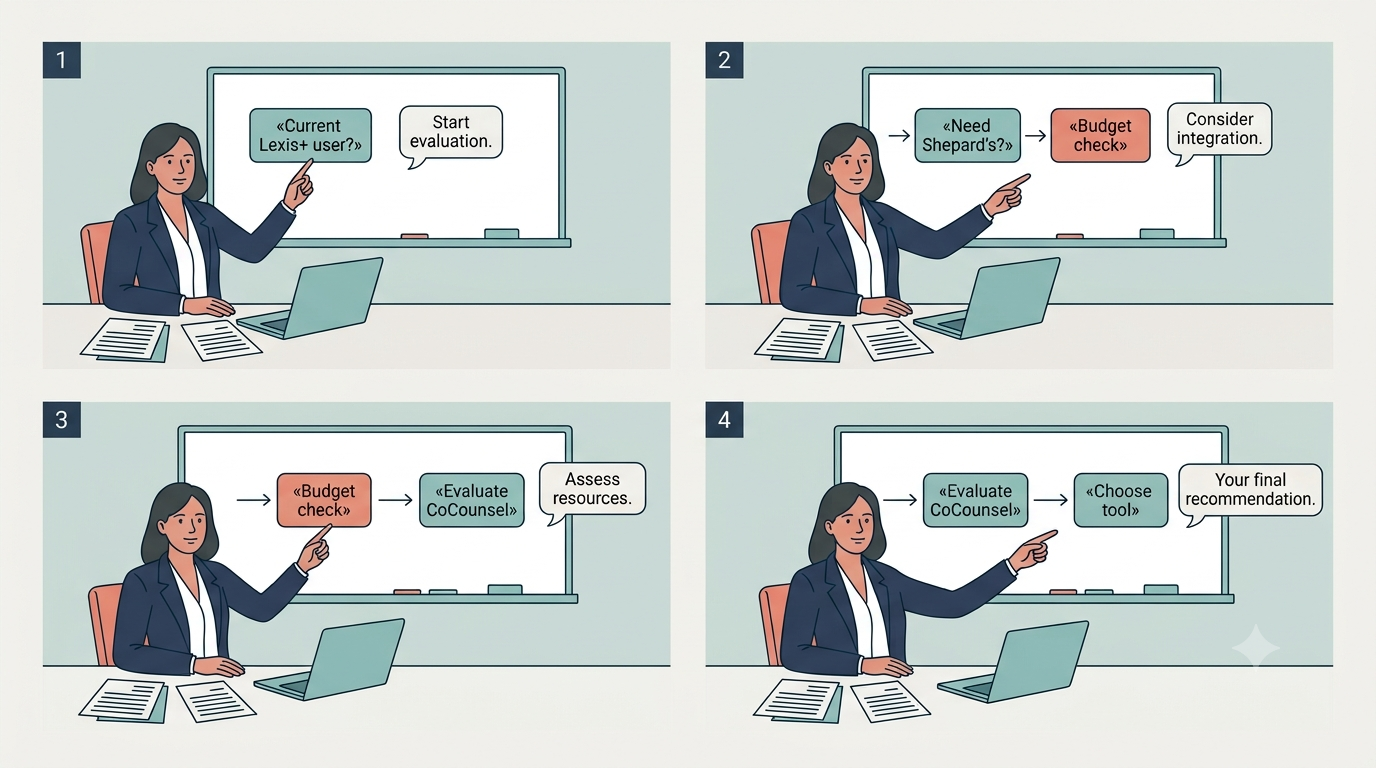
On agentic capabilities, both platforms have been evolving rapidly. CoCounsel’s Deep Research feature offers multi-step autonomous research workflows, and its integration with Practical Law gives transactional attorneys a strong drafting and clause library. Protégé’s August 2026 Legal Intelligence Engine upgrade brings comparable agentic continuity, with the additional flexibility of switching between Legal AI and General AI modes for different task types. Neither platform has a decisive agentic advantage as of late 2026 — the differentiation is more about content library loyalty and workflow fit than raw capability.
| Feature | Lexis+ with Protégé | Westlaw CoCounsel |
|---|---|---|
| Content library | LexisNexis | Westlaw Advantage |
| Citation validation | Shepard’s Verify | KeyCite |
| Hallucination rate (Stanford) | ~17% | ~33% |
| Agentic workflows | Legal Intelligence Engine (Aug 2026) | Deep Research |
| Estimated all-in cost | ~$300–$500/user/month | ~$300–$500/user/month |
| Pricing transparency | Custom quotes only | Custom quotes only |
| General AI mode | Yes (Protégé General AI) | Limited |
Beyond Westlaw CoCounsel, the competitive set includes Harvey AI, which targets large BigLaw firms with deep workflow customization and has attracted significant venture investment, and a range of standalone tools — document review platforms, contract analysis tools, and research assistants — that address narrower slices of the workflow at lower price points. For firms that don’t have an existing Lexis+ or Westlaw commitment, evaluating those narrower tools first can be a sensible way to test AI ROI before committing to a platform-level subscription. The core tradeoff is always citation grounding and verification infrastructure versus cost and flexibility: Protégé and CoCounsel lead on the former; specialized standalone tools often win on the latter.
Security, confidentiality and data handling
Client data does not leave your control to train third-party models. Protégé’s enterprise architecture includes explicit contractual commitments that attorney prompts and uploaded client documents are not used to train the external foundation models — Anthropic, OpenAI or Google — that power its underlying inference. LexisNexis added customer-held encryption keys as part of the 2026 platform expansion, giving firms direct control over the encryption layer protecting matter data at rest and in transit. Shepard’s Citations and the core LexisNexis content database remain within LexisNexis’s own infrastructure, separate from third-party model providers.
Encryption and access controls meet enterprise legal standards. The platform supports role-based access, audit logging, and data residency configurations that enterprise legal IT teams typically require. These controls are relevant not just for security hygiene but for compliance with firm information-security policies and client outside counsel guidelines, which increasingly specify how AI tools may be used on matter data. Firms negotiating a Protégé contract should request the current security documentation — SOC 2 reports, data processing agreements, and subprocessor lists — before finalizing terms.
Attorneys retain professional responsibility for confidentiality regardless of the tool’s security controls. The duties of competence and confidentiality under the Model Rules apply to every AI tool in the workflow. Understanding legal AI confidentiality standards as they apply to generative AI is now a practical prerequisite for any firm deploying Protégé or similar platforms. Bar associations in multiple US jurisdictions have issued guidance on generative AI, and several explicitly require attorneys to understand the data-handling practices of any AI tool used on client matters. Checking current bar guidance in your jurisdiction before deploying Protégé is not optional — it’s part of the competence obligation the rules already require.